
No Dancing, No Revolution.
The Importance of Rhythm, Culture and Seeds

If you could kindly tap the ❤️ at the top or bottom of this newsletter it will make it easier for other people to find this publication.ကျေးဇူးတင်ပါတယ်! Ahéhee’! བཀའ་དྲིན་ཆེ།! 謝謝! Thank you! ขอบคุณ! شكرا ! תודה! Спасибо! धन्यवाद! Cảm ơn bạn! អរគុណ! Merci y Muchisimas gracias!
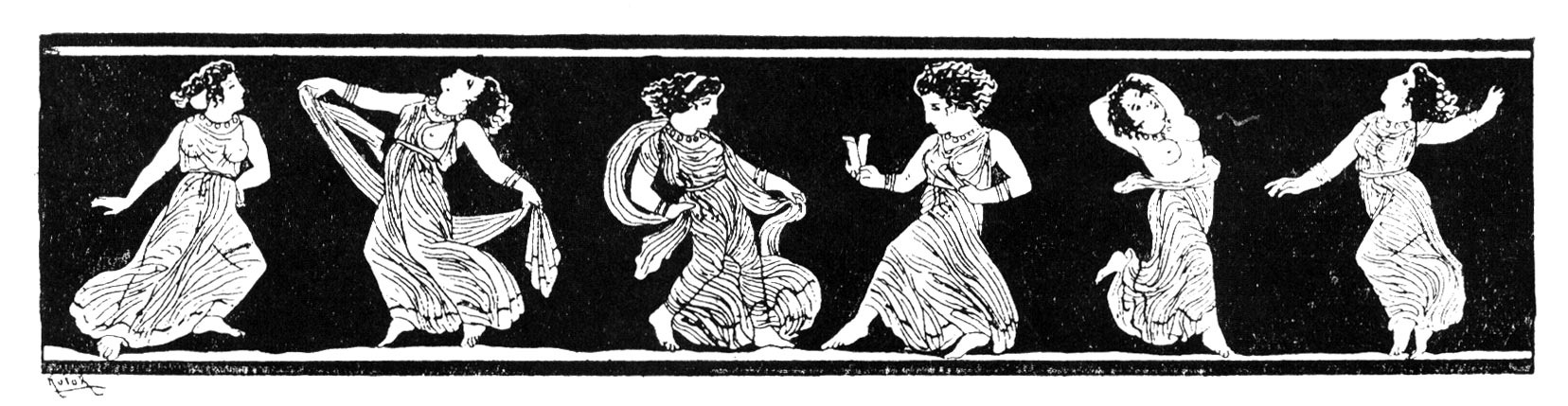
“In many shamanic societies, if you came to a medicine person complaining of being disheartened, dispirited, or depressed, they would ask one of four questions. When did you stop dancing? When did you stop singing? When did you stop being enchanted by stories? When did you stop finding comfort in the sweet territory of silence? Where we have stopped dancing, singing, being enchanted by stories, or finding comfort in silence is where we have experienced the loss of soul.” ~ Angeles Arrien
Somewhere along the line I got grumpy. It happens to the best of us I suppose. We go to bed one night in our mid-twenties only to awaken again one foggy day, decades later to realize our bellies are sagging, our hair is thinning and the only song in our head is the same one we were singing thirty years prior, forever stuck in a bygone era, back when hip-hop was really hip-hop, na’mean?! The fu*k is mumble rap anyway?! Come on kids, go educate yourselves already!!
All those righteous years spent dedicating oneself to something so important we eventually got too tired to make it to the concerts. Dancing started to seem foolish, a cute act reserved only for the juvenile. Somewhere along the line sleep seemed more appealing than sex. “The Cause”, be it political activism, career goals or simply making sure the kids get to bed on time eventually became more important than ecstacy, leisure, spontaneity and art.
I started protesting fascism in the Bush years. It seemed clear to me even then, just after 9/11, that the whole friggin’ system was rigged. Young and full of passion, I rallied then like a bat out of Hell to wake the naive masses from their woeful political slumber. But in those early days the desire to change the world was motivated by a deep love of the world and not merely at hatred of “the other”. All acts were inseparable from our desire for communion with the whole colorful mess of existence. Especially the act of resistance, which, though risky (several of my friends were viciously attacked by cops), was by nature intimate, even romantic.
I don’t remember much of my school days. But those days spent in the streets were enormously educational. We were actively building culture. Life was unpredictable, filled possibility, and song. At each protest we went to, bands like Rage Against the Machine would show up spontaneously and remind us that our efforts were not in vain, that the revolution was worthwhile. It was sexy, wild, necessary and fun. Beautiful young (and young at heart) men and women allowed their bodies to release centuries of built up angst as drums sounded and we marched through streets we claimed without permission, demanding our voices be heard. The whole thing was rather… erotic.
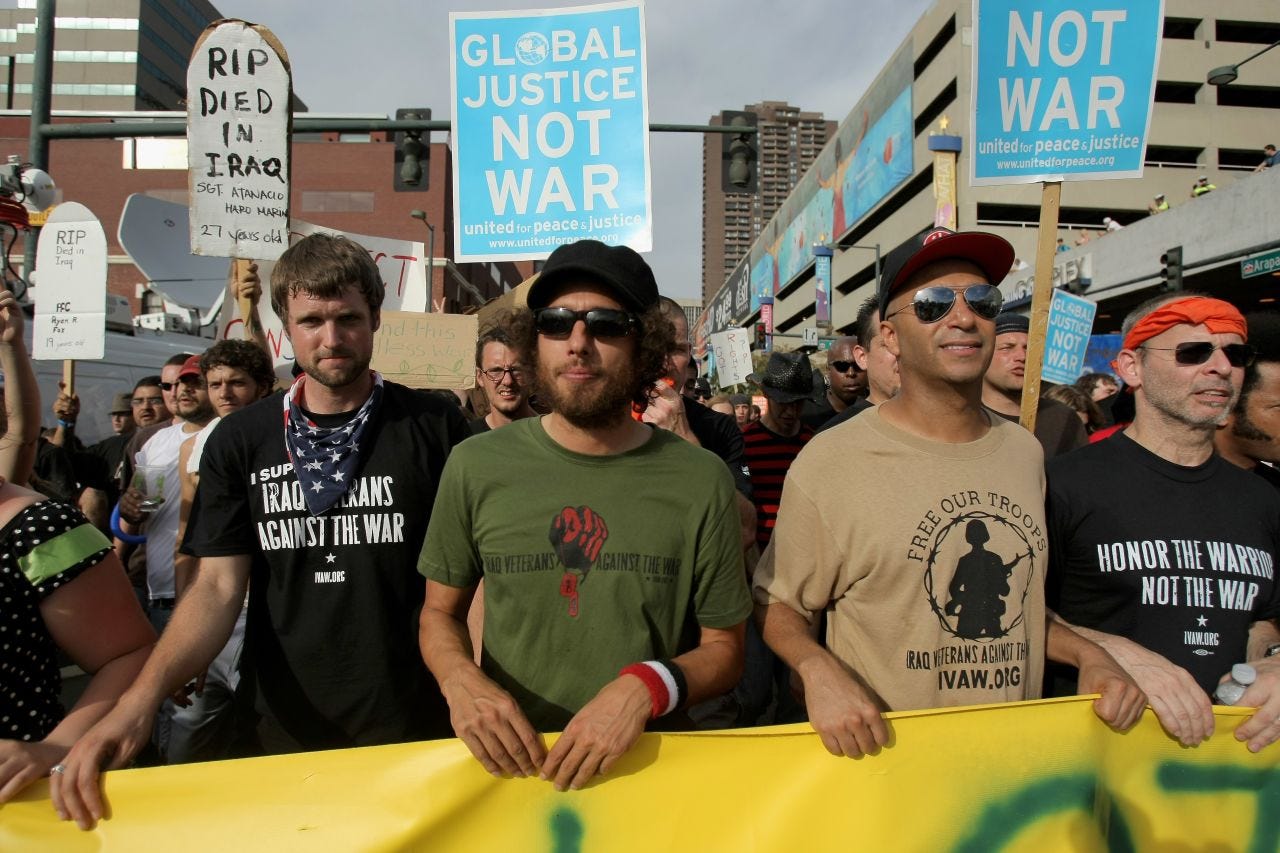
Battle of Denver, 2008
…
But at some point the bands stop playing. Maybe it was the simple fact that everyone got too old to dive into the mosh pit anymore. Indeed, it was a major psychic blow to see Zack De La Roca tear his Achilles tendon at the start of RATM’s long anticipated reunion tour. But more likely it’s the heightened level of exhaustion people feel globally in these apocalyptic times. The truth is, compared to now, times simply weren’t as taxing back in the day.
Shit has escalated quickly. Who has the time and energy now to commit to yet another fight? When everyday already seems like a battle, just to make ends meet, get food on the table, to keep Musk and Bezos from polluting our backyards and ICE from stealing our neighbors, who honestly has the capacity left to think creatively, to make music or dance? It’s just easier to fake involvement by reposting messages from Greta and calling it good. I ain’t mad atcha. Got nuthin’ but love for ya. (Damn. Tupac was the realest!)
Anyways. The point is, for one reason or another, that revolution we all carried in our hearts back then managed to lose its spark. The same soccer moms that use to scold us for skateboarding started taking their toddlers to cute little weekend marches pre-approved by the very systems the protests supposedly sought to dismantle. Their tech-bro husbands took videos all the while, “influencing” on Instagram. And as soon as those lovely marches ended, everyone went their separate ways, abiding by agreements made with the police. The white people went back to Boulder and the colored folk back to everywhere else. No real awkward moments of actually getting to know each other necessary. As easy as Amazon. No extended drumming into the late hours of the night. No dancing in the streets beyond the designated space and time. Everything calm, calculated, organized and well-rehearsed. No major disruptions. Business as usual.
I suppose my subconscious just got tired of the whole ordeal. Nothing we did ever seemed to initiate lasting change. Music suddenly seemed less a fuel of conscious evolution and more a marketing ploy. As it died, so did my political engagement. Far too many of my friends grew up to become Republicans, or worse yet, Democrats. Hell, half of Capital Hill claims to be a “deadhead” these days. The whole thing seemed to be sham to me, a depressing demonstration of modernities perpetual revolutionary futility.
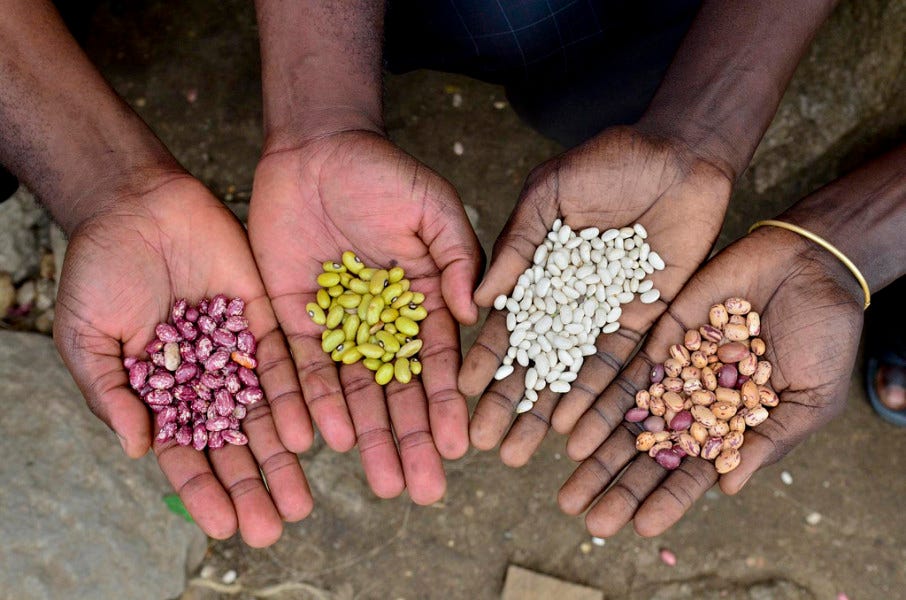
Losing faith in humans, I turned instead to Nature, to the Holy Wild. And ultimately found redemption in Seeds. For only Seeds seemed to consistently offer hope, never betraying the aspirations of the living. Quiet and constant, they remain true. Slowly I veered far from any path resembling a semblance of so-called normalcy. And to this day, I remain tucked far away, deep within the northern forests of Thailand, spending most of my time in silence, thumbing slowly through thousands of story-filled, life-giving, (r)evolutionary seeds.
Yet, as fate would allow, shortly after I abandoned the world, people from all around the world managed to find me. Good people. Kind people. People who can still hear the old songs being sung by the stars at sunset. Old herbalists from Korea. Young hippies from Appalachia. Somatic therapists from Singapore. Krisha devotees, Christians, pagans, Buddhists, web-3 enthusiasts. Refugees from Myanmar, Israel, Palestine, Mexico, the U.S.A. They often ask what our vision is. We look at the eARTh and sing to Her.
Some of these new friends recently invited us to offer workshops at a handful of music festivals nearby. The image of tripped-out wooks spinning to psychedelic trance startled me, taking me back to my Phish-loving daze. My immediate response was to deny their kind offer. I am too old for that shit, I thought to myself. But not long ago my wife and I made a vow that we would remain vigilant with our commitment to Seed. That wherever they asked us to go, we would reply with a “yes.” So, somewhat reluctantly, I agreed to attend the colorful gatherings and do what I could to bring a rather heavy conversation into a space of drug-induced euphoria.
The truth is, I seldom know what I am going to say before I begin talking to a group of students. The same is true for playing music or writing. I have never grown into a place of deep confidence regarding much of anything at all and when dealing with something as sacred as Seeds, I often feel especially inadequate. Like so many other things in this post-modern realm of stolen culture, the story of Seeds have been hijacked. Knowing this, and being aware of the body I reside in, I take great care to not appropriate indigenousity when speaking from the heart about my personal relation with Seeds.
It is absolutely true that people who look like me are very much responsible for the fact that 95% of the worlds Seed diversity has gone extinct in the last quarter century due to a dizzyingly rapid global acceptance of industrialized life. And with the Seeds, so too have countless languages and elegant ways of being been lost. But it is also true that many who look like me have humbly worked with Seed long enough and sincerely enough to know that all the beauty of the world comes not from any particular people or place, but from the multi-colored center of the Holy Wild, an unborn and indestructible force pulsing elegantly from within the core of all life, everywhere, all the time, instantly. That which gave rise to all grand cultures of the world came not from the fruit, but from this Holy Spark.
It is this Holy Spark that I bow to. Not to any one god, religion, spiritual people or tradition. Though I have tremendous respect for the peoples I have learned from, and for all peoples everywhere for that matter. In coming to know Seeds, I have experientially come to know that the wisdom all share comes not from the ones who generously offer gifts, but from Her Who Made Them. So it is thus that from Her I find my confidence. Any story I offer, though often generously given to me from people I have met through Seed, ultimately sprout forth from Her. It is important for us to remember this, and mention this always. Lest we forget.
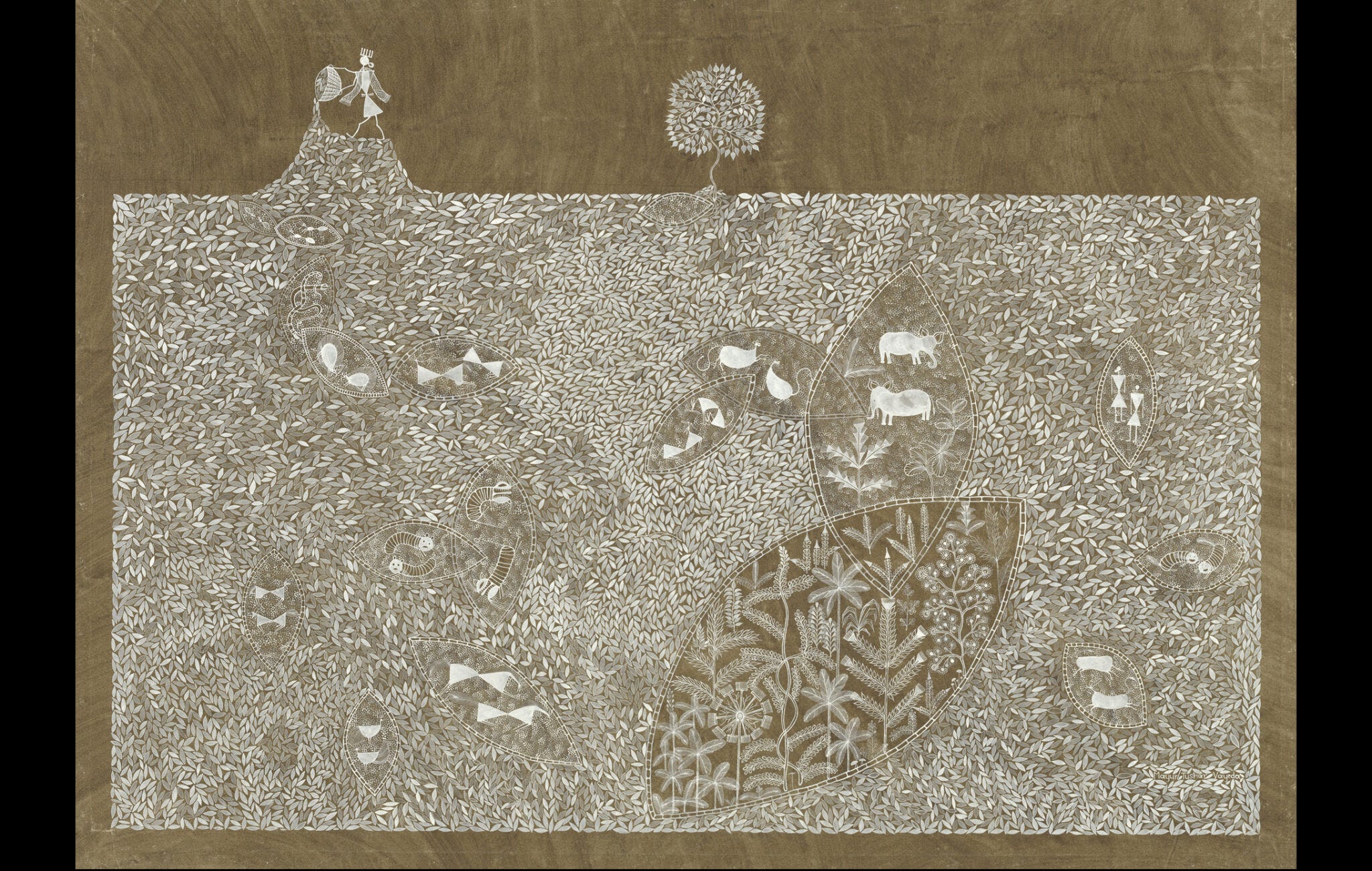
Kansari (Goddess of Seeds) Sarmaya
…
My family and I wandered into the festival grounds wondering what we should share that would resonate with this group of blissed-out hippies? Postmodern talks of Seed often speak of species extinction, cultural genocide and a world gone mad. We were given an hour to talk and I didn’t want to bum everyone out. So I did what I always do. I made a prayer to the Seeds, asking them what They wanted to share. My wife offered some food to the ancestors and gave gifts to Land. We arrived early and sat with the prayer together for a good long while, until finally people gathered around us, around the Seeds that lay before us, beneath flowering vines and our Father Sun. I had nothing to say for several minutes. So we all sat together in semi-silence. The sound of EDM (electronic dance music) blast around us, invoking a strange post-modern rhythm that oddly seemed to conjure up an ancestral memory of some distant tribal resonance. And suddenly a story came.
…
Years ago, a fellow Seed-saver friend of mine shared with me a tale about the origins of a strain of squash she had shared with me. To understand the importance of this squash, we need to first recognize that in times before now, when we lived in places of relational, intergenerational, more-than-human belonging, Seeds meant a great deal more to us humans than they do now. For many peoples, certain Seeds were understood to be the original ancestors of a people. This was certainly true for the people who shared with me this particular squash Seed.
When the European colonizers began taking over the Americas, they recognized the deep relation between the peoples of Turtle Island, etc. and the Seeds they tended to. With this knowing, when the newcomers began attempting to exterminate the original peoples, they also attempted to exterminate the Seeds that gave them not only nutritional value, but spiritual purpose and power. During the boarding schools years, when children were forced to leave their families, forced to speak english, cut their hair, dress like the colonizers, eat their bland ass food etc., everything that was theirs was forbidden, including their heritage Seeds and songs.
It wasn’t until very recently that the original peoples of Turtle Island (now referred to as the U.S.A.) were allowed to teach their native languages, histories, etc. openly. Knowing this tragic display of overt arrogance was coming, forward thinking ancestors of these native tribes often hid important clues in plain site, knowing that they would be overlooked by the white man. When conditions were right, these clues would be discovered, understood and would ultimately return the people to Right View.
So it was thus that one day, a few years back, due to new laws that finally allowed native teachers to share their own stories, that a group of young children were joining their teachers for a field trip to ancestral lands. (I won’t specify here where to honor a private request to keep the details anonymous.) Like most children anywhere, the kids weren’t entirely focused on the history lesson, more interested in fooling around, playing games with each other, etc. At one point a young boy leaned, no doubt in a state of boredom, against an old adobe wall. As he did so, the wall caved in and out from within the ancient wall fell an old Seed jar. As the jar hit the ground it broke open and revealed a gift that had been preserved for them within that wall for generations; their ancestral squash Seeds. The ones that birthed their people. The ones the colonizers had attempted to eradicate forever. There they were again! Or was it the other way around?
For anyone who has ever worked in a garden, you know that a Seed will only sprout when it has the right amount of sunlight, compost, dirt, water, etc. Certain conditions are required for life to sprout. In this case, the Seeds being tended to were of another time altogether. The soil, water, the entire landscape had been altered so much since these Seeds had last touched Earth that they might as well have just entered into another realm altogether. But with great faith the people planted some of these Seeds nonetheless, keeping a few back just in case nothing grew. They found a seemingly good spot to plant the squash Seeds, buried them with care and watered them daily. But after a week or so it was clear the Seeds would not grow.
A year passed. In that year the people came together in ways they had not for several generations. Conversations amongst them were had that had not taken place since days of old. “How do we tend to these seeds in a way that allows them to live"? was a questions heard often. So much had been lost. The people could barely speak their own language anymore. Modernity had hijacked most of the necessary conditions for life to sprout. But the Spark of Life that allows life to live is ever-present. So they kept looking. They began to learn about what foods their ancestors ate, what words they use to speak. Slowly they brought as much of the original conditions back together as they could in hopes that the Seeds would again feel familiar, safe enough to show Her face. But once the day to plant the Seeds again arrived, nothing broke through the soil.
Now only three Seeds remained. In all the world, these were the only three Seeds that remained. A life-giving grief gave rise to ancient view with this knowing. A holy desperation. A sacred longing to re-member. The people began to pray. They had nearly forgotten all the old prayers, dances and songs but they did their best, with great sincerity and heART, willing to make noble mistakes in a grand effort to feed lost memory well enough that it might birth again the Goddess.
And so it came to be. One night about a month before it was time to plant the Seeds a Great Dream came to the grandmother of the child who found the squash Seeds. In this dream she was approached by an ancestor who reminded her that her people had always sung to the Seeds when they were buried, that they danced for them and told the big Stories of Origins. This resonance was literally encoded within the flesh of each Seed. So deep was this rhythmic relation that the Seeds would no longer grow if the songs were not sung, if the dances were not danced. The ancestor then taught this grandmother the songs and the dances she spoke of and instructed her to, in turn, teach them again to the people. Which she did.
Soon the entire village knew the songs. The lost rhythms returned and with them both the people and the Seeds remembered how to live. Faces that had not smiled for years lit up as brightly as the Sun that shined upon the Seeds as they were buried in the buzzing, dancing soil that year. And within days, never-before-seen sprouts came into view. They grew and grew and grew. Alongside the songs and the dances, they all came together again and flourished, eventually passing into ripeness and offering thousands of Seeds for the next year.
…
As I told this story to the festival goers, I felt as though I was speaking to ten thousand tribes who all spoke ten thousands different languages. I could feel in the vibration of my words an ancient echo bouncing off their exhales. The genetic vestigial resonances of countless unsung songs, songs that instructed us all for countless millennia how to live well in a Place, were slowly returning home.
Not all seeds sprout. I am sure most of the people who joined us that day simply walked away and merged back into the jirating masses, smoked some ganja and returned to that blissfully ignorant space of cultural amnesia. But the thing that struck the deepest chord in me had little to do with whether or not anyone understood what had been said. It was my guts awareness again of the power of rhythm. I was shocked by how long it had been since I had danced. I am a musician for god’s sake! But the rhythm had grown dull, monotonous, modern. No wonder I had nearly lost my spark! Yet the music was finding me again, forcing movement and initiating growth.
My wife and I went on to share at a couple other festivals, looking deeper each time at the awesome power of sound and its inseparability from memory and creation. Facts alone do little when trying to explain complexity, and time constraints don’t allow the Big Stories much room to groove. So we abandoned all expectations of convincing anyone of anything at all and simply sung in service of Seed, offering Them a rooted prayer. In so doing, a much needed return to rhythm sparked something deep within me, a forgotten desire, a joyful expression of necessary hope, a most human thing that became clear as day when finally we returned to our farm and witnessed over the interwebs the profound poetry of a Puerto Rican man they call Bad Bunny.
“This is Benito’s revolution. In a radical and defiant act, he performs his whole set in Spanish. When asked about what could be seen as a “barrier”,” he says, “come to dance.” The revolution is not division but in dancing; not in bullets moving but bodies moving; not in separation and kidnapping but being close and intimate. The message is clear: we’re in a storm and the only way through is to look around at who we are and make it through together.”
I had never heard of Bad Bunny before. I am an aging hippy who can’t seem to break the habit of perpetually playing the Grateful Dead every time I turn on the radio. But enough friends and readers of my Substack reached out to me and told me I should check out the Super Bowl Halftime show that, well, I did. And I am so very glad that i did. I was stunned. It will be a while before I fully process the power of it all. The whole set seemed like the final sealing of a multi-week re-discovery The Holy World was presenting me with on the necessity of rhythm, culture and Seeds.
Rhythm. Culture. Seeds… The people are utterly lost without these things. All one need do is google kid Rocks “All American” halftime show to see what the result of not having these things is. But what Bad Bunny showed us was parallel to what the Seeds showed my friends in Turtle Island and what they had been showing me at the festivals my wife and I attended. People, like Seeds, are from the eARTh. And just as Seeds need rhythm in order to sprout, so too do we.
Benito Antonio Martinez Ocasio (i.e. Bad Bunny) gave us this. It didn’t matter whether or not we could understand Spanish. (By the way, for the record, expressing to the world that you can’t understand Spanish only makes YOU look like an idiot. Just sayin’…) For those who carry with them the appropriate conditions, something from deep within began to move at the first note. A spark was lit in the most unlikely of spaces, the Super Bowl Halftime Show, and I surmise this Holy Spark will not be going out anytime soon.
Were Benito to directly speak about all that was displayed in his grand cultural narration it would have fallen on deaf ears. Facts alone do little when trying to explain complexity, and time constraints don’t allow the Big Stories much room to groove. But as it was all fueled elegantly by a typhoon of rhythm, held together by dancing fields of sugarcane, a deeply resonating story of colonial rule was expressed within a container that offered life, healing and even joy. Everything was there. The resistance, the displaced farmers, the culture, the depleted soil and extracted wealth, the Seeds and of course, the astounding story Puerto Rico’s survival against all odds.
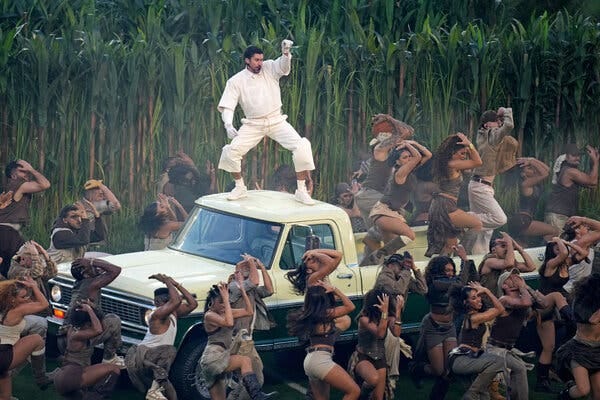
Something very ancient is surfacing again now. We have to get with it and find the groove. We have to get out of our homes and back into the streets. We are being asked by Creator to join all life for the greatest ceremony ever held. Listen closely to the sound of the Original Instructions returning. Under the obnoxious noise of modernity, hidden within the cracks of so-called “civilization”, frolicking with foxes on the forgotten fringes of business-as-usual, The People are starting to dance again. The Seeds are taking root. And I… Well suddenly, thanks to Bad Bunny, I’m not feeling so grumpy anymore. Turns out Hip-Hop, is better than ever.
God Bless America!
We live in a kind of dark age, craftily lit with synthetic light, so that no one can tell how dark it has really gotten. But our exiled spirits can tell. Deep in our bones resides an ancient singing couple who just won't give up making their beautiful, wild noise. The world won't end if we can find them.
-Martin Prechtel
or…
If you could kindly tap the ❤️ at the top or bottom of this newsletter it will make it easier for other people to find this publication.ကျေးဇူးတင်ပါတယ်! Ahéhee’! བཀའ་དྲིན་ཆེ།! 謝謝! Thank you! ขอบคุณ! شكرا ! תודה! Спасибо! धन्यवाद! Cảm ơn bạn! អរគុណ! Merci y Muchisimas gracias!
#theonlythingmorepowerfulthanhateislove
I’m so glad you’re here and I’m here and let’s do something about it, yes, and it’s our voices that will carry the day, I bet, I mean, I might be wrong, but I seriously want to invite us to consider the ways in which our language is who we are to be with one another. I forgor; thank you for reminding me!
Vinaka vakalevu Brother Greg 🙏🌱